People’s Science Institute

Sustainable and Inclusive Urbanisation

PSI promotes sustainable urban development through scientific planning, improved water and sanitation management, and community participation to build resilient, inclusive, and environmentally sustainable cities.

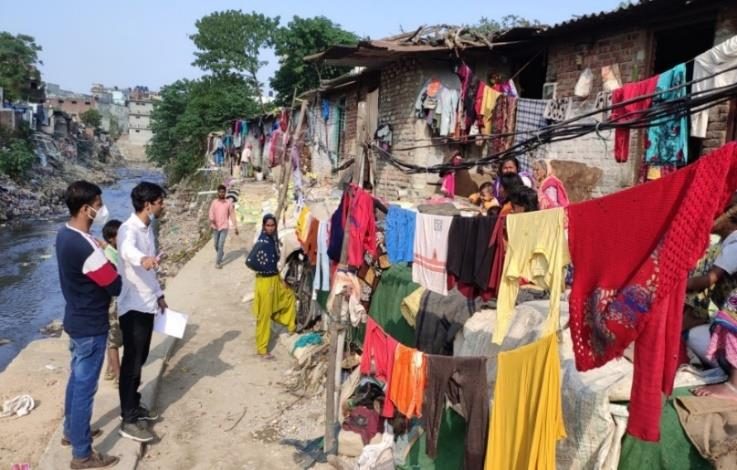
Field staff walking through a dense neighbourhood with a drain

From our work over the years

2022

Recharging Gwalior’s groundwater

Shallow aquifer management, 2022 to 23

  • 20sites assessed
  • 6sites finalised

Promoting sustainable GW management and aquifer recharge in Gwalior city, along with reducing stormwater accumulation and flooding, through the support of NIUA and MoHUA

The Shallow Aquifer Management was a pilot project under government-run program AMRUT 2.0 which aimed to revive and recharge Gwalior’s declining shallow groundwater sources. It was a joint collaboration that involved NIUA, Gwalior Municipal Corporation, People’s Science Institute, ACWADAM and BIOME Environmental Trust.

The project used mixed methods consisting of field surveys, groundwater data, hydrogeological studies and mapping of underground flow to extract data which was later used to identify the suitable recharge areas. The team initially assessed 20 sites, out of which 6 sites were finalised to pursue the project.

These sites included check dams, recharge wells, rainwater harvesting systems and ponds. Based on Gwalior’s geological and urban conditions, the team then developed a roadmap to support shallow aquifer management and identify priority areas for groundwater recharge.


See it on the timeline
Open a larger view: Field staff walking through a dense neighbourhood with a drain
Hydrogeological and engineering survey at Lakmiganj

2022

Mapping air pollution from the ground up

System mapping of air quality pollution, 2022 to 23

  • 4cities: Ahmedabad, Bhubaneswar, Indore and Mumbai

Stakeholders consultations in Ahmedabad, Bhubaneswar, Indore and Mumbai cities through the support of USAID-India to engage local actors including slum dwellers to identify gaps, priorities, and existing efforts in the local system and come up with locally led collaborative mitigation measures

PSI conducted a study which focused on local stakeholders and communities’ knowledge in combating the rapidly increasing air pollution in Indian cities, the data was collected from four major Indian cities that is Ahmedabad, Bhubaneswar, Indore and Mumbai. The study was funded by the USAID and Government of India.

The team interviewed major stakeholders, documented the engagement around civic issues and studied resources to understand the ground reality of policies and engagement on pollution. The analysis produced a comprehensive report that covered the community’s understanding of air pollution and mobilisation around it to a mainstream framework of knowledge.

It also pointed out the opportunities that USAID can have with the local actors and implement the local knowledge on policy level.

See it on the timeline

Our partners and supporters

  • Sir Ratan Tata Trust
  • WWF-India
  • ICIMOD
  • GIZ
  • ACWADAM
  • IIT Roorkee
  • University of Birmingham
  • University of Arizona
  • University of Delhi
  • IWMI
  • CGIAR
  • Hero MotoCorp
  • NIUA
  • MoHUA
  • USAID
  • CAPART
  • Department of Science and Technology
  • Planning Commission
  • BIOME Environmental Trust
  • CEDA
  • IIT Kanpur
  • ICAR-NBFGR
  • Gwalior Municipal Corporation
  • Government of Uttarakhand
  • MoRD